
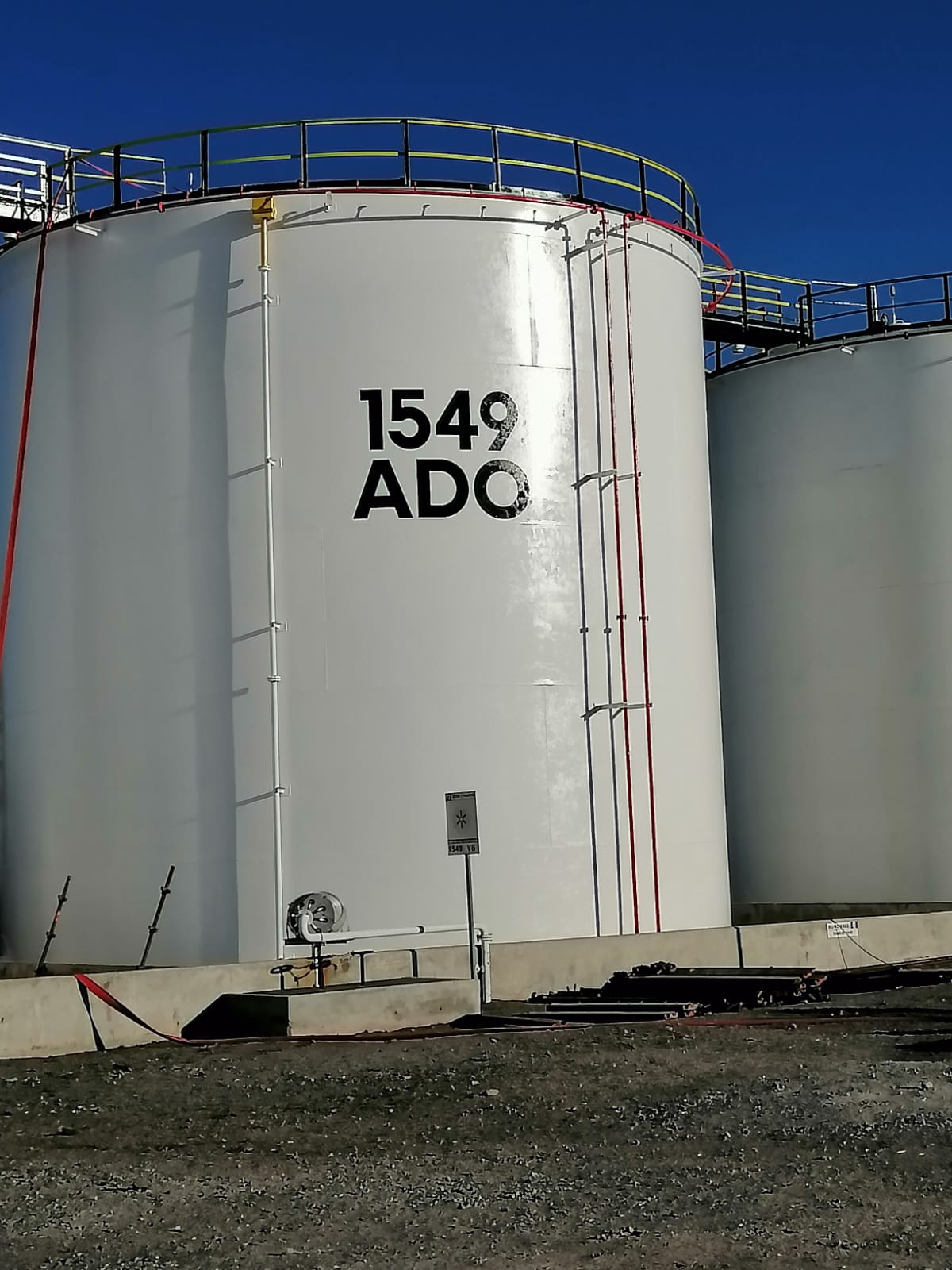
API653
Bulk Storage Tank Refurbishment (API653).
API653 inspections, repairs and reconstruction. Designed around the next 20 years of the asset's life.
What this solves
Choosing the right intervention.
Most calls about a tank come at the same point: the last out-of-service inspection flagged thinning floor plates, the external coating is breaking down, and the internal lining is past its design life. The tank is still safe to operate. The job is to choose the right intervention to get another 20 years out of it without overspending.
We do the inspection, develop the repair plan against API653, execute it under our QCP framework, and hand back a tank with a clean inspection record and a credible service-life trajectory. A typical refurbishment costs 30 to 50% of new construction and recovers most of the asset benefit.
Practical approach
How we refurbish a tank.
- Out-of-service inspection. We map floor and shell thickness, run a settlement survey, check fittings condition and test lining integrity.
- Repair plan and MOC. API653 calculations for minimum thickness, repair-vs-replace decision per plate, Management of Change documentation.
- Floor plate replacement. Partial or full, with the IFR in place where geometry allows. We decide sketch plates, annular ring plates and lap-weld versus butt-weld on the plate layout.
- Shell strake repair. Insert plate replacement, weld build-up, re-stress relief where required.
- Internal lining renewal. Surface prep to Sa 2.5 or better, atmospheric monitoring against the manufacturer's limits, and the specified coating system applied by our own approved applicators.
- External coating renewal. We prep, then apply coating as per the specification, typically a 3-coat epoxy / polyurethane system.
- Cathodic protection. Sacrificial anode or impressed current, designed to the soil-side environment.
- Hydrotest and recommissioning. Settlement monitoring during refill, fittings leak test, handover with full audit pack.
Compliance
Standards we work to.
- API653 — Tank inspection, repair, alteration and reconstruction.
- API650 — Reference standard for new construction (used for sections that fall back to original construction rules).
- API 651, API 652 — Cathodic protection and lining of aboveground petroleum storage tanks.
- SSPC / NACE / AMPP — Surface preparation and coating standards.
- ASME IX — Welding qualifications.
- SANS 10089 / 10131 — South African petroleum storage standards.
- ISO 9001:2015, ISO 45001:2018 — Webmech's quality and safety management systems.
Long-term performance
What you should expect at year 5, year 10, year 20.
Year 5. External coating still intact at 95% or better. Isolated mechanical damage repaired under routine maintenance. Internal lining adhesion test passes. No measurable floor settlement.
Year 10. Mid-life external inspection per API653 confirms shell corrosion rate below threshold. Internal lining still serviceable. Minor touch-up may be needed at floor weld seams.
Year 20. Next major refurbishment cycle starts to be scoped. The previous one has bought a full 20-year service window. The decision is whether to renew lining and external coating again, or scope a more invasive intervention.
That trajectory only happens if the refurbishment scope was correctly diagnosed up front. That diagnosis is where we start.
Related projects
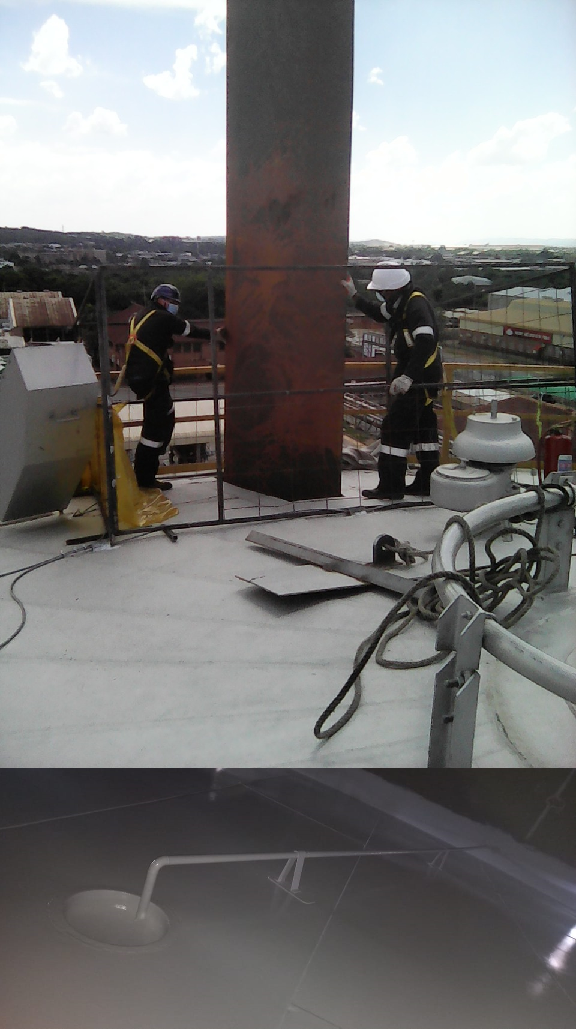
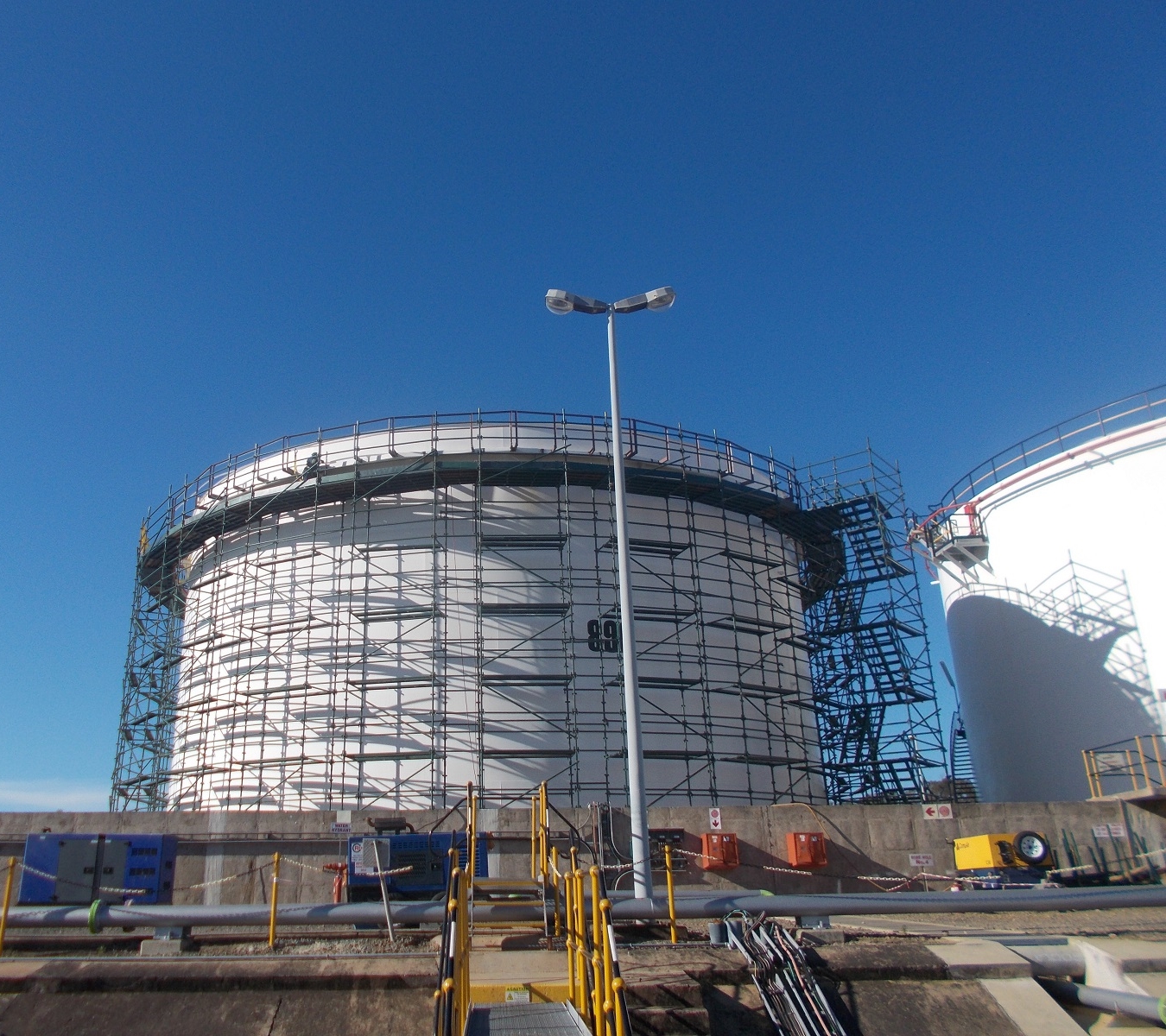
Recent refurbishment work.
FAQ
Frequently asked questions.
What's the difference between API650 and API653?
API650 governs the construction of new welded steel storage tanks. API653 governs the inspection, repair, alteration, and reconstruction of in-service tanks. New build tanks are designed and built to API650; once in service, they are inspected, repaired, and reconstructed to API653. See our full reference article.
How often should a bulk storage tank be inspected under API653?
API653 specifies external inspections at least every 5 years, and internal out-of-service inspections at intervals based on calculated corrosion rates, typically 10 to 20 years for a tank with a competent coating system. Routine in-service inspections by the owner are required monthly.
Can a tank floor be replaced without dismantling the tank?
Yes. Webmech regularly performs floor plate replacements with the internal floating roof in place, where access and dimensions allow. This cuts total downtime compared to a full dismantle-and-rebuild.
What does a tank refurbishment usually include?
A typical refurbishment scope includes: out-of-service inspection, settlement survey, shell and floor thickness mapping, repair plan development, floor plate replacement (full or partial), shell strake replacement where required, internal lining renewal, external coating renewal, fittings refurbishment, hydrotest, and re-commissioning.
How long does a refurbishment buy you?
A well-executed refurbishment typically buys 15 to 20 years of additional service life, provided the lining and external coating systems are specified correctly for the product and environment, and the inspection intervals are maintained.
Tank approaching end of inspection interval?
Send the tank ID, last-inspection date and product service. We'll come back with a refurbishment scope and budget within five working days.