
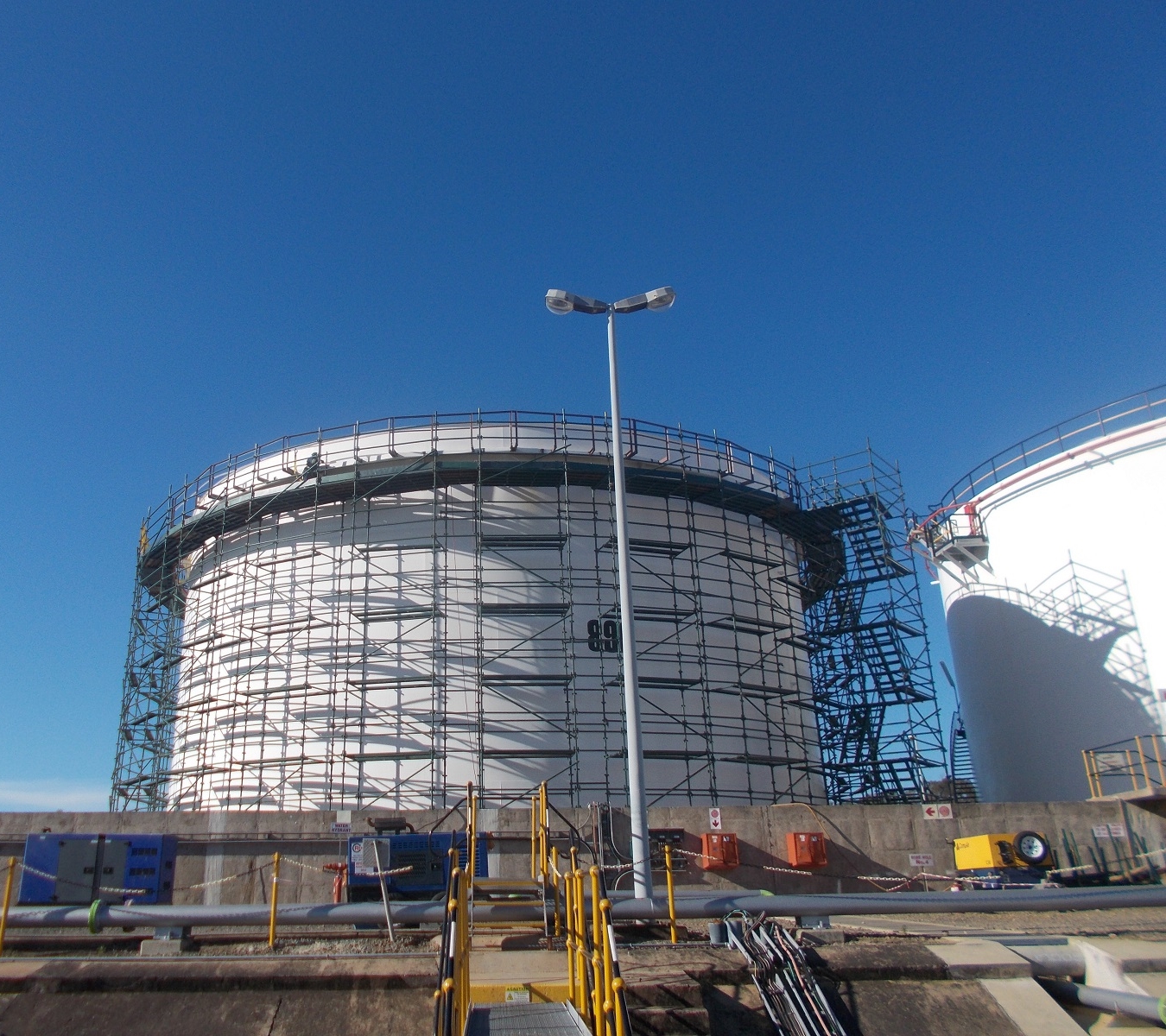
API650
Bulk Storage Tank Construction (API650).
Welded steel atmospheric storage tanks designed and built to API650, with the roof type, lining and ancillaries selected for the operating environment.
What this solves
Storage capacity that meets the standard from day one.
Most bulk storage failures show up 8 to 15 years after construction, not during it. The foundation wasn't levelled correctly, or the lining specification didn't match the product, or the roof drainage was an afterthought.
We build bulk storage tanks that are API650-compliant in every detail. The second-order decisions (lining selection, roof type, foundation drainage, vent sizing, anti-corrosion measures) are made by the engineer who signs the deliverable rather than by procurement. The tank meets capacity on day one, passes hydrotest, and stays in service for 30+ years.
Practical approach
How we build a tank.
- Site survey and geotechnical review. We test compaction and drainage, model settlement, and design the ring beam.
- Foundation construction. We excavate, compact, install oily-water containment, then cast the ring beam and lay the sand pad.
- Plate cutting and forming. Shell, bottom, annular ring and roof plates. We cut, roll and prepare them in the workshop or on site, whichever the schedule allows.
- Erection. Bottom plate welding, shell course erection (jacking or conventional), plumbness and roundness checks per API650 tolerances.
- Roof installation. Fixed cone, dome or geodesic dome. IFR or floating-suction installation where specified.
- NDT and weld testing. Vacuum box, magnetic particle, dye penetrant and radiography per the QCP, all on welds laid by coded welders.
- Internal lining and external coating. Surface prep, atmospheric monitoring, and application of the specified system by our own manufacturer-approved teams.
- Hydrotest and commissioning. Settlement monitoring during fill, hydrotest pack handover, commissioning support.
Compliance
Standards we work to.
- API650 — Welded steel tanks for oil storage. Material, design, fabrication, erection, testing.
- ASME B31.3 — Process piping, for tank tie-ins and ancillary piping.
- ASME IX — Welding and brazing qualifications.
- SANS 10089 — Petroleum industry storage and distribution (South Africa).
- SANS 10131 — Above-ground storage tanks for petroleum products.
- OHSA Construction Regulations — site safety compliance.
- NEMA / NEM:WA — environmental compliance.
- ISO 9001:2015 & ISO 45001:2018 — Webmech's quality and safety management systems.
Long-term performance
What you should expect at year 5, year 10, year 20.
Year 5. Settlement behaviour stabilises. First out-of-service inspection per API653 confirms shell, floor and roof corrosion rates below threshold. Coating system passes adhesion test.
Year 10. Internal inspection shows expected wear patterns, no through-wall corrosion. The floor lining is intact and the original capacity is still available.
Year 20. Major refurbishment under API653 starts to be scoped. The tank is a candidate for floor plate replacement and lining renewal rather than a new build, because the foundation, shell and roof structure remain sound.
That's the trajectory a properly-built API650 tank follows.
Related projects
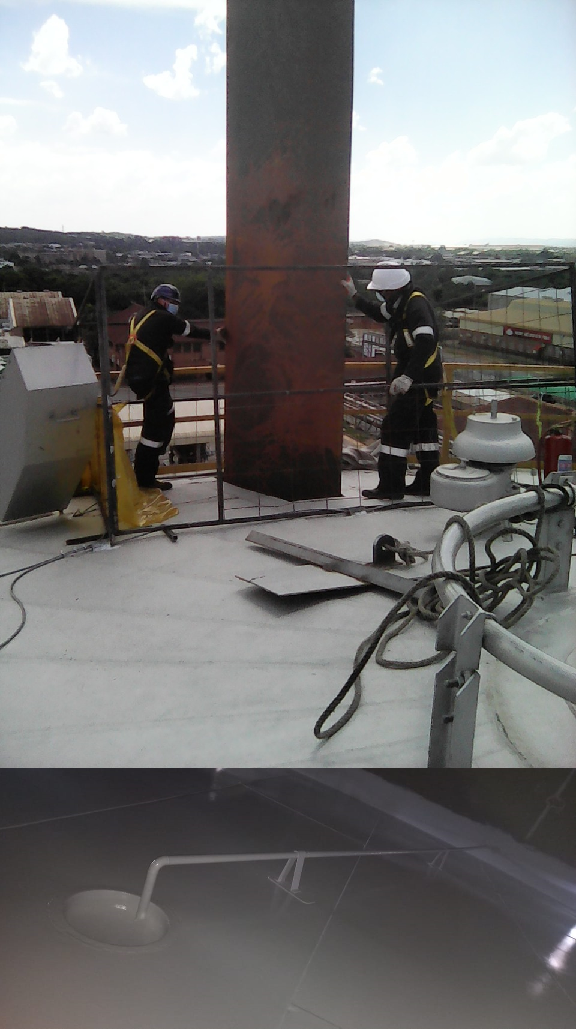
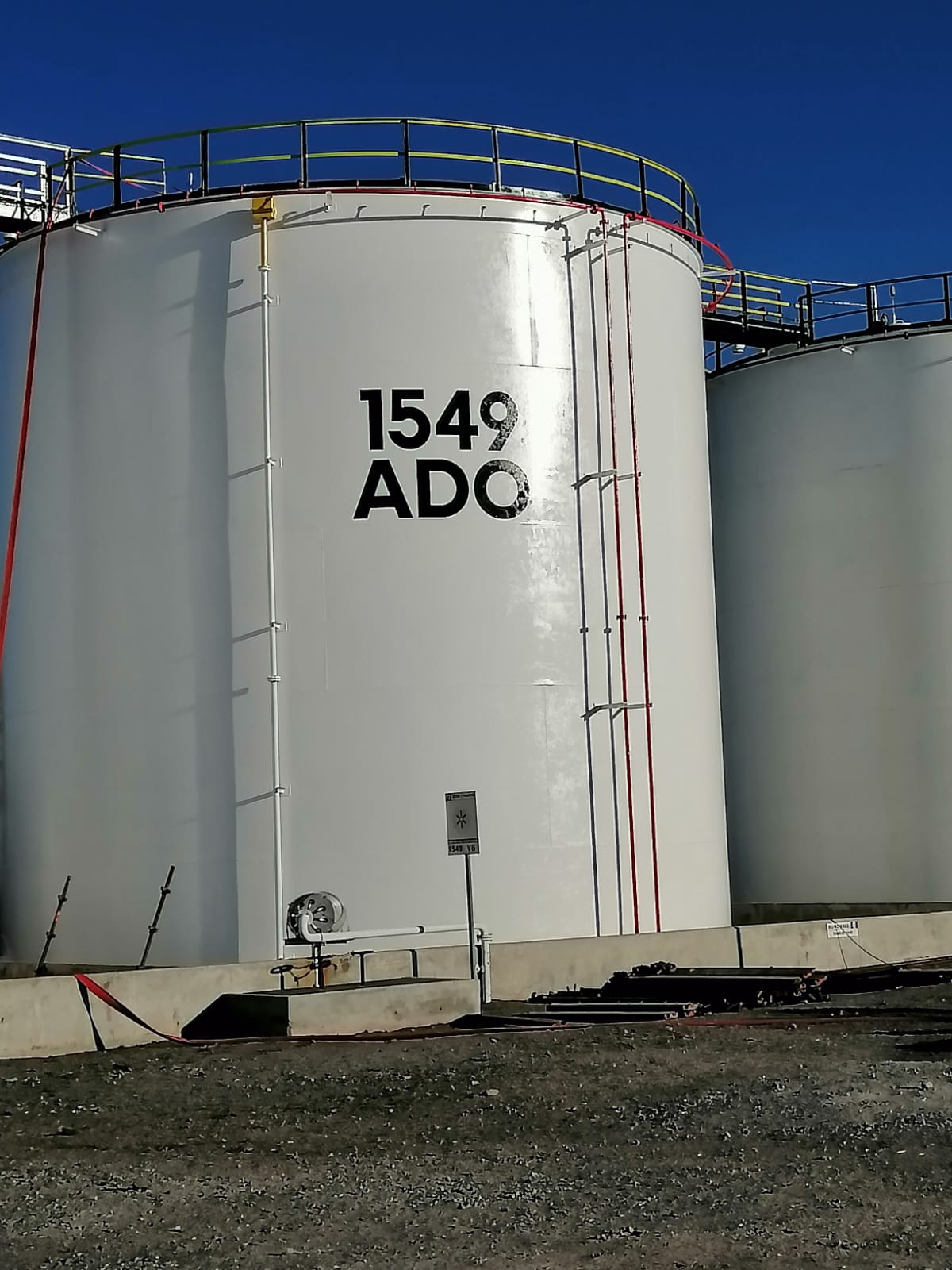
Recent bulk storage work.
FAQ
Frequently asked questions.
Which API standard governs new bulk storage tank construction?
API650 governs the design, materials, fabrication, erection and testing of welded carbon steel above-ground atmospheric storage tanks. Webmech designs and builds to API650 and complements it with SANS 10089 / 10131 for South African petroleum storage requirements, plus ASME B31.3 for the associated piping.
What roof types does Webmech build?
Fixed cone roofs, fixed dome roofs, geodesic dome roofs (Elsont), aluminium and stainless-steel internal floating roofs, external floating roofs, and floating suctions for jet fuel applications. The right selection depends on product vapour pressure, environmental requirements and operating temperature.
How long does a typical new tank build take?
For a single 5,000 m³ to 15,000 m³ carbon steel tank with foundation already prepared, expect 16 to 28 weeks from material drop to commissioning, depending on shell course count, roof type, and weather. Larger tanks and multi-tank programmes are scheduled around hydrotest water availability and tie-in windows.
Do you build the foundation as well?
Yes. Foundation design and construction is part of our standard scope and matters for long-term tank performance. Ring beam, oily-water containment, compaction and final levelling all affect future settlement behaviour.
What's the design life of a properly-built API650 tank?
A properly designed and constructed API650 tank, with appropriate coating systems and a maintenance regime aligned to API653 inspection intervals, has a service life of 30 to 50 years before major refurbishment is required.
Planning a new tank build?
Send through the capacity, location and target start date. We'll come back with a budget estimate within five working days.